
Diabetic eye in Singapore: Your guide to diabetic eye screening
Written by Eagle Eye Centre
Published on June 26, 2026

Diabetes is one of the most common long-term health conditions in Singapore, and its effects extend beyond blood sugar levels.
Research from the Singapore Epidemiology of Eye Diseases study found that 8 in 10 people in Singapore with diabetic retinopathy are undiagnosed, highlighting a significant gap between how common the condition is and how often it is actually detected.

For people living with diabetes, the eyes are one of the parts of the body most at risk. Diabetes-related eye changes can develop gradually and without obvious symptoms, which means that by the time vision is affected, some damage may already have occurred.
This is why diabetic eye screening matters. Regular screening can help detect changes in the eye early, before they progress to affect vision in a significant way.
How diabetes can affect your vision
Diabetes affects how the body manages blood sugar. When blood sugar levels remain high over time, the tiny blood vessels throughout the body can be damaged, including those in the eyes.
The retina is the light-sensitive layer at the back of the eye that relies on a network of small blood vessels to function. When these vessels are affected by diabetes, they may weaken, leak, bleed, or become blocked. Changes can also affect the macula, the part of the retina responsible for sharp central vision, including reading, recognising faces, and seeing fine details.
Diabetes may be linked to several eye conditions, including:
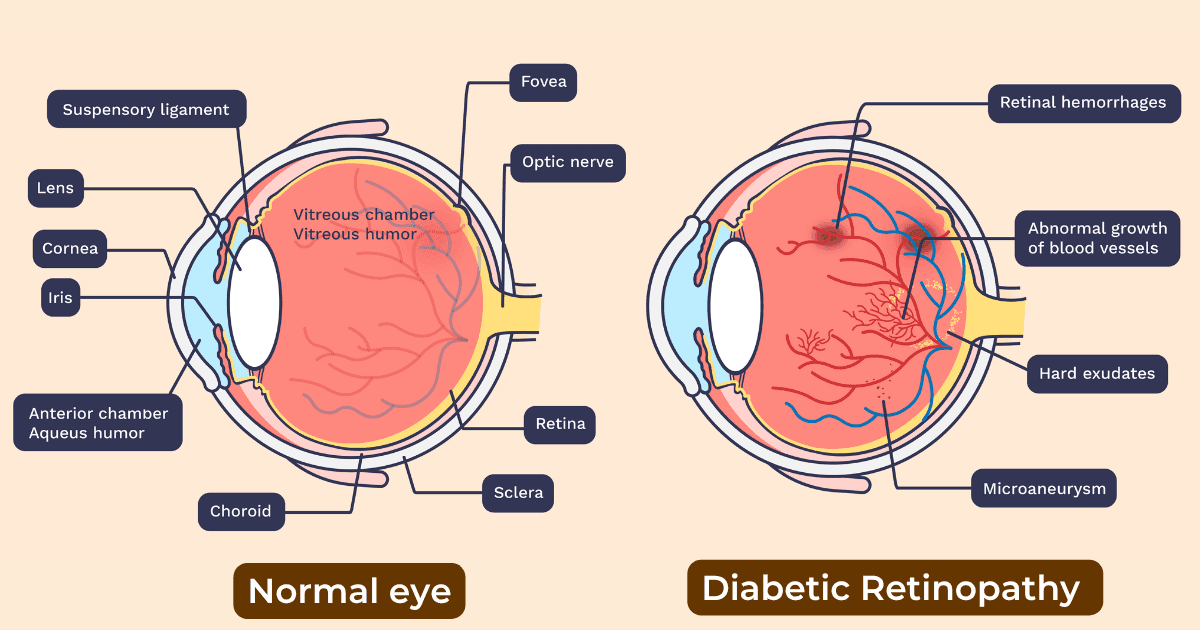
- Diabetic retinopathy , which involves damage to the retinal blood vessels and may lead to leakage, bleeding, or structural retinal changes
- Diabetic macular edema, where fluid builds up in the macula and may affect central vision
These changes can develop slowly and silently, which is why regular eye checks are important even when vision still seems clear.
Why you may not notice early changes
One of the challenges with diabetes-related eye conditions is that early stages often cause no symptoms at all. Many people with diabetes delay an eye check because their vision still feels normal, or because they attribute changes to tired eyes, dry eye, presbyopia, or a need for a new glasses prescription.

Early diabetic retinopathy in particular can develop without any noticeable vision change. Waiting until something feels wrong is not always enough.
If you have diabetes, you should arrange an eye check promptly if you notice any of the following:
- Blurry or fluctuating vision
- Dark spots, floaters, or shadows in your vision
- Straight lines appearing bent or distorted
- Difficulty reading or recognising faces clearly
- Sudden or unexplained changes in vision
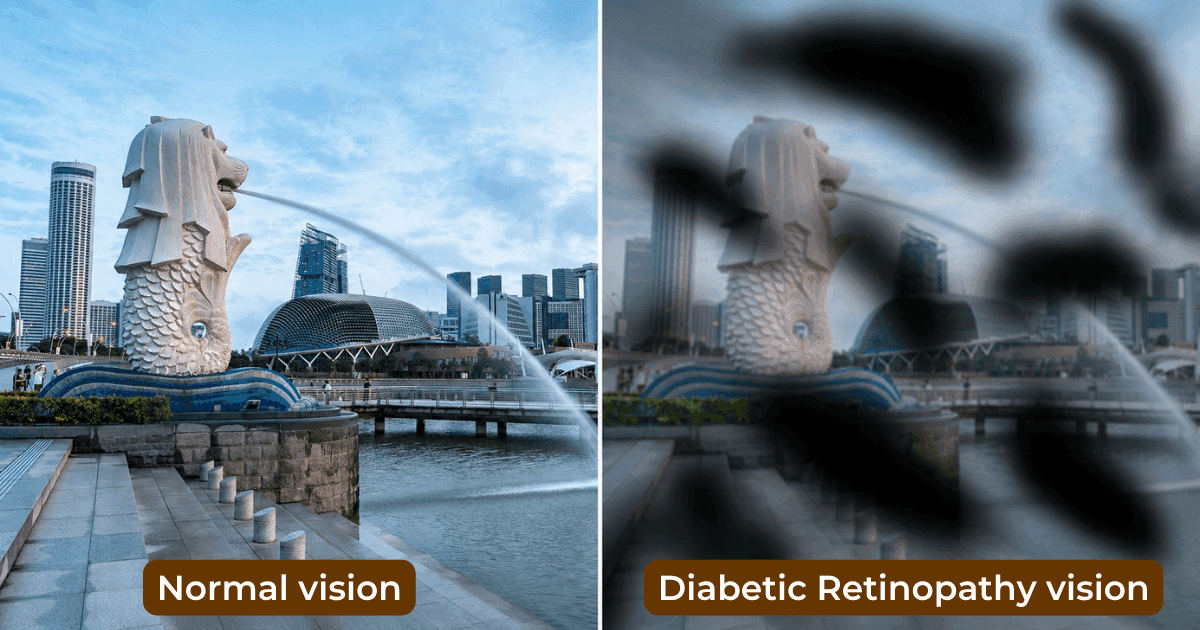
These symptoms may not always be caused by diabetic eye disease, but they should not be left unchecked, particularly if you have diabetes.
What diabetic eye screening involves
Diabetic eye screening is a dedicated assessment that checks whether diabetes-related changes are affecting the retina and surrounding eye structures. It is different from a routine vision check or spectacle prescription update.
At Eagle Eye Centre, diabetic eye screening includes:
- Vision testing and assessment by senior optometrists
- Auto-refraction to assess eye power
- Retinal examination to screen for diabetes-related changes in the eye
The aim is to understand the condition of the retina before symptoms develop, and to guide appropriate follow-up based on individual findings.
How often should you go for diabetic eye screening?
For people with diabetes, annual diabetic eye screening is generally recommended, even if your vision feels normal. Depending on your individual risk factors, your eye care professional may advise more frequent monitoring.

Factors that may influence how often you should screen include:
- How long you have had diabetes
- How well your blood sugar has been managed over time
- Whether any retinal changes have already been detected
- Other health conditions such as high blood pressure or high cholesterol
If you are unsure how often you should be screened, your eye specialists can advise based on your personal history.
Speak to our diabetic eye specialists
Early detection is an important part of diabetic eye care, as diabetes-related eye changes can develop quietly before vision is affected. At Eagle Eye Centre, our retinal specialists assess and monitor signs of diabetic retinopathy, diabetic macular edema and other related eye conditions, helping patients with diabetes manage their long-term vision risks.
Dr Stephen Teoh

Director of Vitreoretinal Surgery, Retinal Services and Uveitis
Specialises in retinal surgery and medical retina care, including diabetic retinopathy and other retinal conditions that may affect vision...
Get to know more bout Dr Stephen Teoh→
Dr Jacob Cheng

Senior Consultant Ophthalmologist
Director of Retina Services and Vitreo-retinal Surgery
Specialises in vitreoretinal diseases, with clinical interests in diabetic retinopathy, retinal vascular diseases and medical retina care...
Get to know more about Dr Jacob Cheng →
Dr Paul Zhao

Senior Consultant Ophthalmologist
Specialises in retina surgery and diabetic eye disease, including retinal conditions that may require further evaluation or treatment...
Protecting your vision starts with a screening
For people living with diabetes in Singapore, diabetic eye screening is one of the most important steps you can take to protect your long-term vision. Early detection means more options, and more time to act before vision is affected.
At Eagle Eye Centre, our team supports patients with diabetes through dedicated eye screening and specialist care. If you have diabetes and have not had a recent eye check, now is a good time to arrange one.