
Recurrent Corneal Erosion
What is Recurrent Corneal Erosion (RCE)?
Recurrent Corneal Erosion is a condition that affects the outermost layer of the eye — the corneal epithelium. This layer serves as a barrier against dust, debris and bacteria. In RCE, the epithelium fails to stay properly attached to the underlying corneal tissue, leading to repeated episodes of breakdown. These erosions usually happen after waking up and are often accompanied by sharp eye pain.
Common symptoms
The most common symptom is a sudden onset of eye pain, particularly in the morning. Other signs include:
- Red or watery eyes
- Light sensitivity (photophobia)
- Foreign Body Sensation
- Blurry vision during flare-ups
- Irritation or dryness in the affected eye
- Discomfort that improves as the day progresses but recurs the next morning

Why it happens
RCE is often caused by a previous injury to the eye, such as a scratch from a fingernail or paper. This trauma can damage the epithelium and prevent it from fully healing. Instead of forming a strong bond with the corneal surface, the layer remains loose, which leads to repeated episodes of erosion.
In some cases, RCE can also be caused by corneal dystrophies like map-dot-fingerprint, lattice dystrophy, or Reis-Bucklers dystrophy, which compromise the stability of the epithelial layer.
Diagnosing Recurrent Corneal Erosion (RCE)
Our doctors begin with a detailed discussion about your symptoms, including when they occur and their severity. A slit-lamp examination is then performed to examine the corneal surface under magnification.
To identify areas of erosion more clearly, fluorescein dye may be applied. In persistent or complex cases, corneal topography may be used to map irregularities in the corneal surface. This helps us confirm the diagnosis and rule out other conditions like corneal ulcers, dry eye or infections.
Who is most at risk?
Lifestyle factors, such as living in a dry environment or frequently rubbing your eyes, may also contribute.
Past eye injury or trauma
Improper contact lens usage
Eye surgery
Dry eye syndrome or meibomian gland dysfunction
Diabetes or ocular rosacea
Being over the age of 40
Female gender
Who is most at risk?
Treatment
For associated conditions like dry eye or blepharitis, additional treatment may include punctual plugs or anti-inflammatory therapy.

First-line care
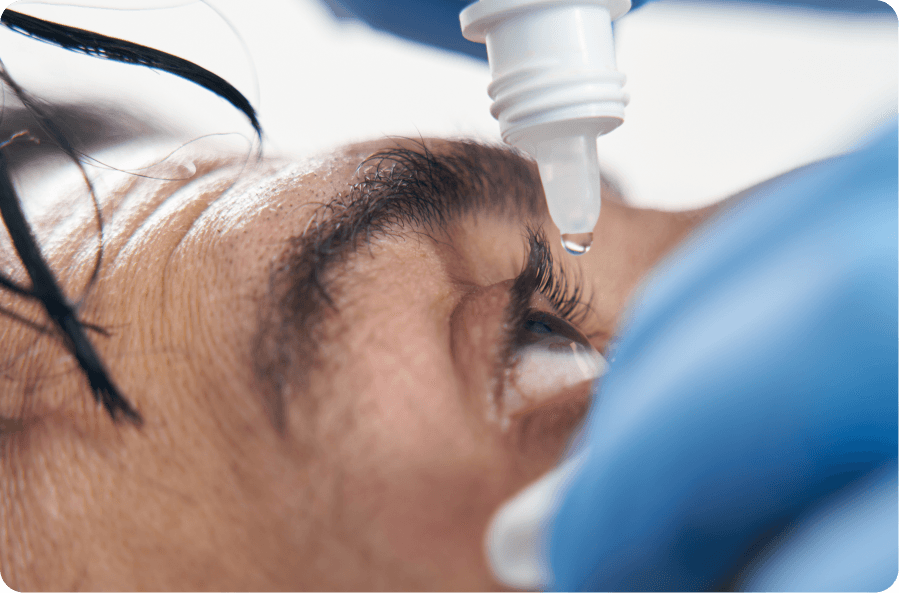
Treatment usually starts with preservative-free lubricant drops during the day and ointment at night to keep the cornea moist and reduce friction from blinking. A soft bandage contact lens may be applied to protect the eye during healing. In some cases, antibiotic drops may be prescribed to prevent infection.

After-treatment care
Most patients notice improved comfort after the first course of treatment. Long-term use of lubricants is typically advised to prevent recurrence. In some cases, follow-up may include monitoring the cornea’s surface healing and adjusting your treatment plan.
Complications are rare but can include scarring, infection or persistent discomfort. Regular reviews help reduce these risks and maintain healthy vision.
Our specialists
Our team of board-certified ophthalmologists and licensed optometrists brings together decades of specialized training and experience. Each doctor has completed additional fellowship training in subspecialty areas, ensuring you receive the most advanced care available.



Frequently asked questions
Ask us anything about how we can help you understand eye care better!
WHAT YOU SEE MATTERS
Experiencing morning eye pain or blurry vision?
If you're waking up with sudden eye pain, irritation or foggy vision, you may be experiencing recurrent corneal erosion. Contact Eagle Eye Centre today to schedule a detailed eye assessment and learn about treatment options available at our Singapore clinics.