
PRK vs SMILE
Written by Eagle Eye Centre
Published on October 30, 2026
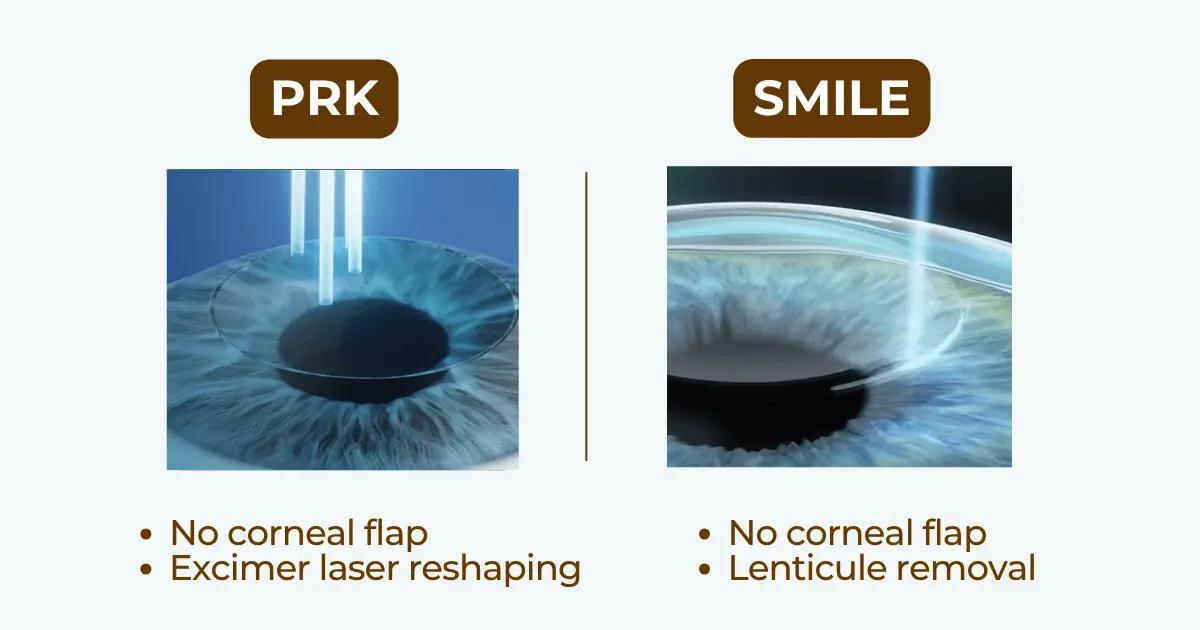
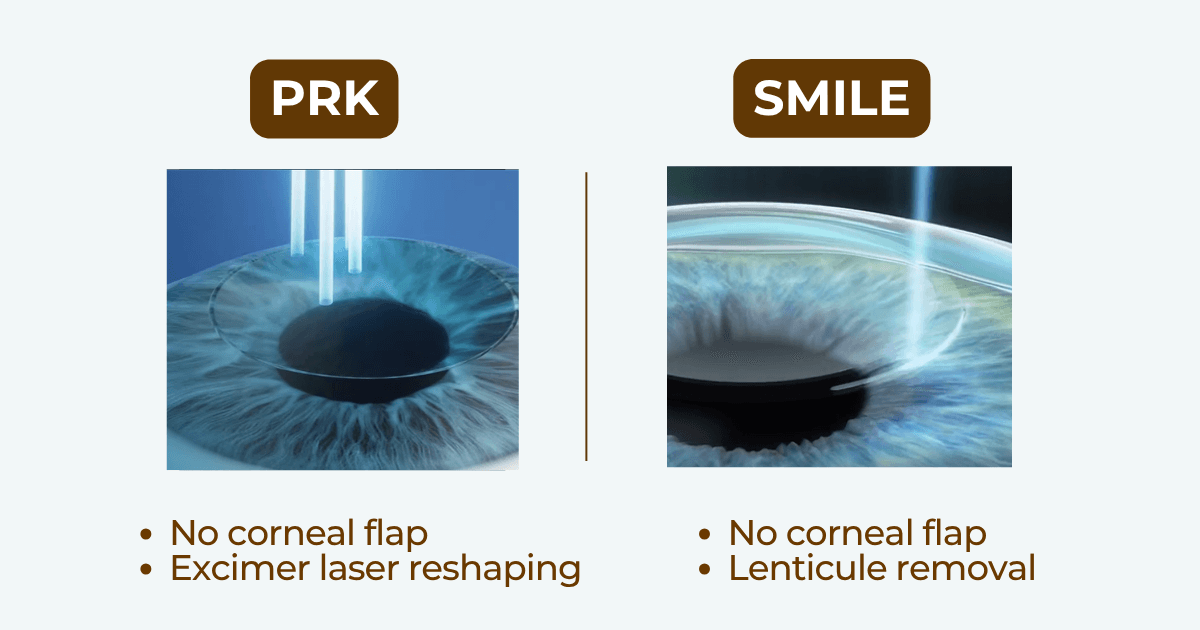
PRK and SMILE are laser vision correction procedures that can reduce dependence on glasses or contact lenses. Both reshape the cornea without creating a LASIK-style flap, but they use different techniques and have different recovery experiences.
PRK treats the cornea beneath its surface cell layer, which must regrow after surgery. SMILE removes a small piece of tissue from within the cornea through a small incision. Understanding these differences can help you discuss your options with your eye specialist.
Understanding PRK
What is PRK?
PRK stands for photorefractive keratectomy. It is a surface laser procedure in which the epithelium, the outermost layer of the cornea, is removed before an excimer laser reshapes the tissue underneath. The epithelium then grows back during recovery.
What can PRK correct?
PRK is used to correct myopia (short-sightedness) and astigmatism. It may also be considered for selected cases of hyperopia (long-sightedness). The prescription that can be treated depends on the laser system, your corneal measurements and the amount of healthy tissue that would remain after treatment.
How is PRK performed?
After your assessment and treatment planning, the procedure usually involves:
- Step one : Anaesthetic eye drops to numb the eye and an eyelid holder to keep the eyelids open.
- Step two: Removal of the surface epithelium by the surgeon.
- Step three: Excimer laser treatment to reshape the underlying corneal tissue.
- Step four: Placement of a temporary bandage contact lens to protect the healing surface.
You receive prescribed eye drops and aftercare instructions before going home.
Who may be suitable for PRK?
PRK may be considered for adults with a stable prescription and healthy eyes, including those who:
- Have corneas too thin for LASIK.
- Participate in contact sports.
- Prefer a procedure without a corneal flap.
A thin cornea does not automatically make PRK suitable. Your doctor will assess your corneal shape, thickness and planned treatment together.
Potential benefits and limitations of PRK
Potential benefits
- Avoids LASIK flap-related complications.
- Can treat several types of refractive error.
Potential limitations
- Longer initial recovery while the corneal surface heals.
- Pain and fluctuating vision during early healing.
- Dry eye symptoms.
- Corneal haze, which reduces corneal clarity.
- Possible need for glasses or further correction.
What can you expect during recovery?
During the first few days, pain, tearing, light sensitivity and blurred vision are common. The surface usually heals over several days, often around a week. Your doctor removes the bandage contact lens when healing is sufficient.
Allow around a week or longer before returning to visually demanding activities, depending on your recovery. Vision continues to improve over the following weeks and may take several months to stabilise. Use your prescribed drops and attend all follow-up reviews.
Understanding SMILE
What is SMILE?
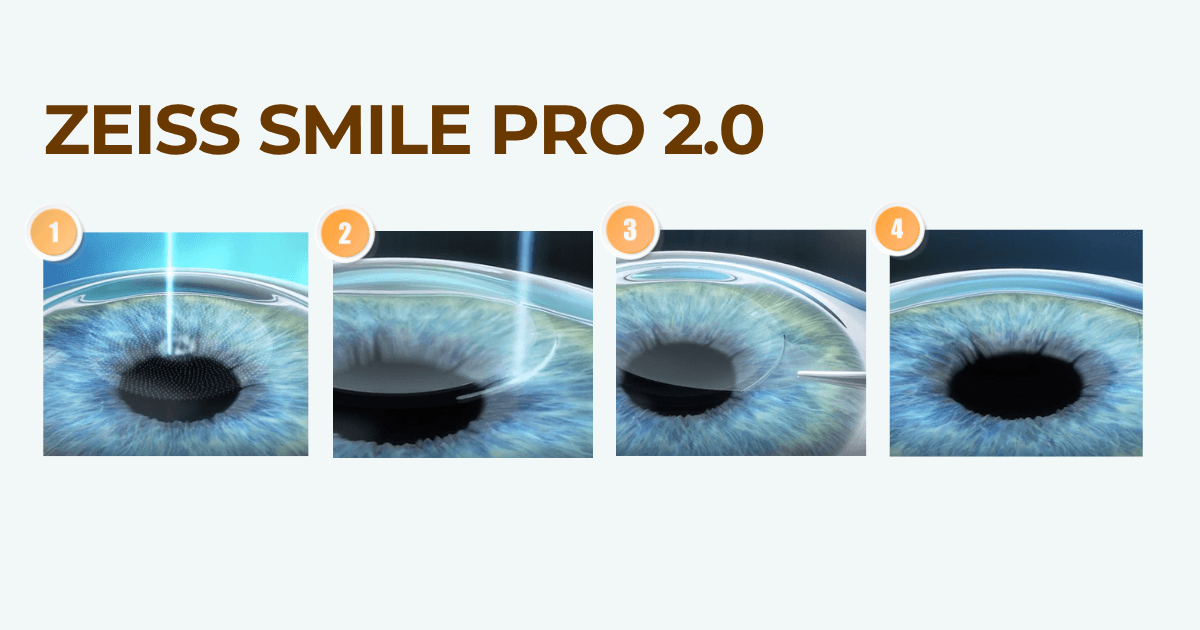
SMILE stands for small incision lenticule extraction. A femtosecond laser creates a thin, lens-shaped piece of tissue, called a lenticule, inside the cornea. The surgeon removes it through a small incision, changing the cornea's shape to correct vision.
What can SMILE correct?
SMILE is commonly used to correct myopia (short-sightedness) with or without myopic astigmatism.
Some SMILE pro systems also offer hyperopia treatment in selected markets. Available treatment options and prescription limits depend on the device, local approvals and the clinic's service. Your doctor will confirm what is appropriate for your eyes.
How is SMILE performed?
The procedure usually involves:
- Step one: Anaesthetic eye drops and an eyelid holder to prepare the eye.
- Step two: Suction through a contact interface to keep the eye in position.
- Step three: A femtosecond laser to create the lenticule and a small access incision.
- Step four: Removal of the lenticule by the surgeon through the incision.
The surface epithelium remains largely intact, and no LASIK-style flap is lifted. Eye drops and follow-up reviews support recovery.
Who may be suitable for SMILE?
SMILE may be considered for adults who:
- Have a stable prescription within the available treatment range.
- Have suitable corneal measurements and healthy eyes.
- Prefer a procedure without a LASIK-style flap.
- Prefer a shorter initial recovery than surface laser treatment.
Suitability requires an individual assessment, including dry eye symptoms, other eye conditions and health issues that could affect healing.
Potential benefits and limitations of SMILE
Potential benefits
- Avoids a LASIK-style flap.
- Usually less initial discomfort and faster early visual recovery than PRK.
- Does not require removal of the central surface epithelium.
Potential limitations and risks
- Suitability depends on meeting treatment eligibility criteria.
- Further correction requires a separate assessment.
- Dry eyes, glare, halos or residual prescription may occur.
- Possible difficulty removing the lenticule or interruption during laser treatment.
What can you expect during recovery?
You may experience blurred or misty vision, watering and a gritty sensation initially. Many patients notice improvement within the first few days and can resume some daily activities relatively soon, following their doctor's advice.
Early improvement does not mean healing is complete. Vision may fluctuate as it settles, and you should continue prescribed eye drops, avoid rubbing your eyes and follow activity restrictions.
PRK vs SMILE: Key differences
Which procedure may be suitable for your eyes?

Your doctor evaluates your prescription, corneal shape and thickness, and the amount of tissue needed for correction. Corneal scans also help identify abnormal patterns that may make laser surgery unsuitable. Having a low prescription or a thin cornea alone does not determine the best procedure.
Your eye health and dry eye symptoms
Tell your doctor about dryness, contact lens discomfort, allergies and previous eye conditions. Both PRK and SMILE can affect eye comfort. Existing dry eye may need treatment before measurements and suitability can be assessed reliably; significant disease may make surgery unsuitable.
Your lifestyle and recovery needs
Discuss your work, screen use, driving and sports with your doctor. SMILE may fit a shorter period away from routine activities, while PRK generally requires more time for initial healing. Both avoid a LASIK-style flap, but returning to contact sports still requires medical clearance.
What if neither procedure is suitable?
You can continue using glasses or contact lenses. Depending on your prescription and eye anatomy, your specialist may discuss other options, such as an implantable collamer lens (ICL). Each alternative has its own eligibility requirements and risks, and surgery may be deferred if your prescription or eye health is not stable.
Frequently asked questions
Is PRK more painful than SMILE?
PRK generally causes more pain during the first few days because the surface epithelium needs to regrow. SMILE usually causes milder early discomfort. Anaesthetic drops are used during both procedures, and your doctor will explain how to manage discomfort afterwards.
Can I have either procedure if I already have dry eyes?
Possibly, but you need an assessment first. The cause and severity of your dry eye matter more than the procedure name alone. Treatment may be needed before surgery, and persistent or severe dry eye may make either procedure unsuitable.
When can I return to work, drive or exercise?
Many SMILE patients resume desk work within a few days; PRK patients may need around a week or longer. Driving depends on your measured vision and your doctor's clearance. Exercise, swimming and contact sports have different restrictions, so follow your own aftercare plan rather than a fixed timetable.
Will I still need glasses after surgery?
You may. Neither procedure guarantees complete independence from glasses, particularly for tasks such as night driving or detailed work. Reading glasses may become necessary as presbyopia develops with age, even if your distance vision remains clear.
Can my prescription change after the procedure?
Yes. The corneal reshaping is permanent, but your eyes can continue to change. Healing-related regression, further changes in refractive error and ageing of the natural lens can affect vision later. A stable prescription before surgery helps with planning but does not guarantee lifelong stability.
What happens if further vision correction is needed?
Your doctor first checks the cause of the blurred vision, prescription stability, corneal measurements and eye health. Glasses may be sufficient. If an enhancement is appropriate, the method depends on your previous procedure and remaining tissue; after SMILE, it may involve surface laser treatment or another technique.
How is PRK different from TransPRK?
Both are surface laser procedures without a LASIK-style flap. In conventional PRK, the surgeon removes the epithelium before laser reshaping. TransPRK uses the excimer laser to remove this layer as well. It is often called “no-touch” PRK, but still involves a healing period and post-operative care.
If you are considering PRK or SMILE in Singapore, a refractive assessment at Eagle Eye Centre can help you understand your options. Your eye specialist will review your prescription, corneal scans and eye health, then discuss suitability, possible risks and expected recovery.
If neither procedure is appropriate, your specialist can explain other ways to manage your vision.