
Astigmatism
What is astigmatism?
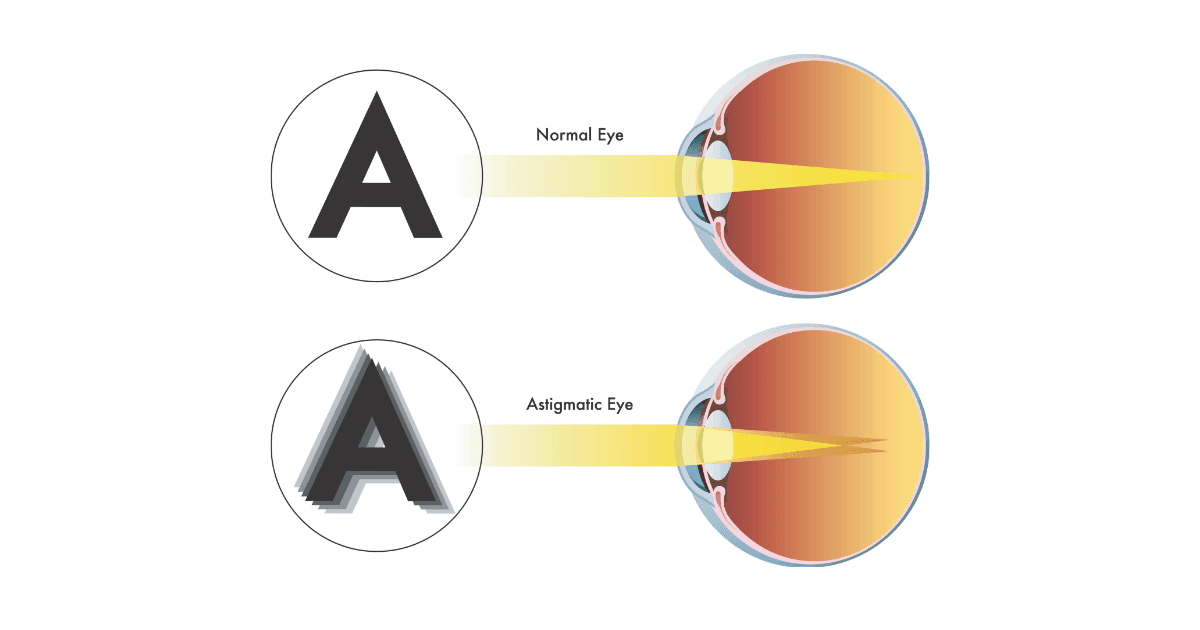
Astigmatism is a refractive error caused by uneven curvature of the cornea or lens. Instead of bending light evenly onto the retina, the eye focuses light unevenly, which may cause blurred or distorted vision at different distances.
Common symptoms
Some people describe their vision as shadowed, stretched, doubled, or not sharp even when looking directly at an object. Astigmatism symptoms may become more noticeable during reading, screen use, night driving, or looking at lights in dim environments.
Common symptoms include:
- Blurred vision
- Distorted vision
- Eye strain or discomfort
- Headaches
- Difficulty with night vision
- Squinting
- Tired eyes after visual tasks
- Difficulty seeing clearly at both near and far distances
What causes astigmatism?
Astigmatism is usually caused by an uneven curve in the cornea or lens, which changes how light focuses inside the eye.
Possible causes include:
- Uneven curvature of the cornea
- Uneven curvature of the lens inside the eye
- Light rays bending at different angles
- Two overlapping or uneven image points forming in the eye
- Corneal astigmatism when the cornea has mismatched curves
- Lenticular astigmatism when the lens has mismatched curves
- May be present from birth
- May develop after eye injury, eye disease, or eye surgery
Risk Factors
Some factors may increase the likelihood of astigmatism or make it more noticeable. These include inherited eye shape traits, previous eye injury, keratoconus, or changes after eye surgery. They may include:
Family history or genetics
Eye injury
Keratoconus
Previous eye surgery
Corneal shape changes
Astigmatism present from birth
Risk Factors
How is astigmatism diagnosed?
An eye doctor or optometrist may ask about blurred vision, headaches, night vision difficulty, screen use, reading comfort, and current glasses or contact lens use. The examination helps identify the degree and type of astigmatism.
An astigmatism eye check may include:
Visual acuity testing
Refraction assessment
Eye health examination
Review of symptoms
Testing with different lenses
Assessment of how the eyes bend light
Prescription check for glasses or contact lenses
Further corneal assessment where needed
How is astigmatism diagnosed?
Managing & treating astigmatism
Astigmatism treatment aims to improve visual clarity and eye comfort. Depending on the degree of astigmatism, lifestyle needs, eye health, and suitability, options may include glasses, contact lenses, or refractive surgery.
Glasses
Eyeglasses are a common way to correct astigmatism. The lenses help compensate for the uneven shape of the cornea or lens so light bends more accurately into the eye. Glasses may also correct other refractive errors such as myopia or hyperopia at the same time.

When should you see an eye doctor?
See an eye doctor if blurred or distorted vision affects your daily activities, reading, screen use, driving, work, or enjoyment of normal activities. An eye doctor can check whether you have astigmatism, measure its degree, and advise suitable options to correct your vision.
Our Specialists
Our team of board-certified ophthalmologists and licensed optometrists brings together decades of specialized training and experience. Each doctor has completed additional fellowship training in subspecialty areas, ensuring you receive the most advanced care available.



Frequently asked questions
Ask us anything about how we can help you understand eye care better!
WHAT YOU SEE MATTERS
Schedule Your Vision Check
Astigmatism can make vision look blurred, stretched, shadowed, or distorted at both near and far distances. Some people also experience eye strain, headaches, squinting, or difficulty seeing clearly at night. A comprehensive eye assessment can help confirm whether astigmatism is causing your symptoms and guide suitable correction options, such as glasses, contact lenses, or refractive treatment where appropriate.