
Learn to take care of your contact lenses
Written by Eagle Eye Centre
Published on August 12, 2026
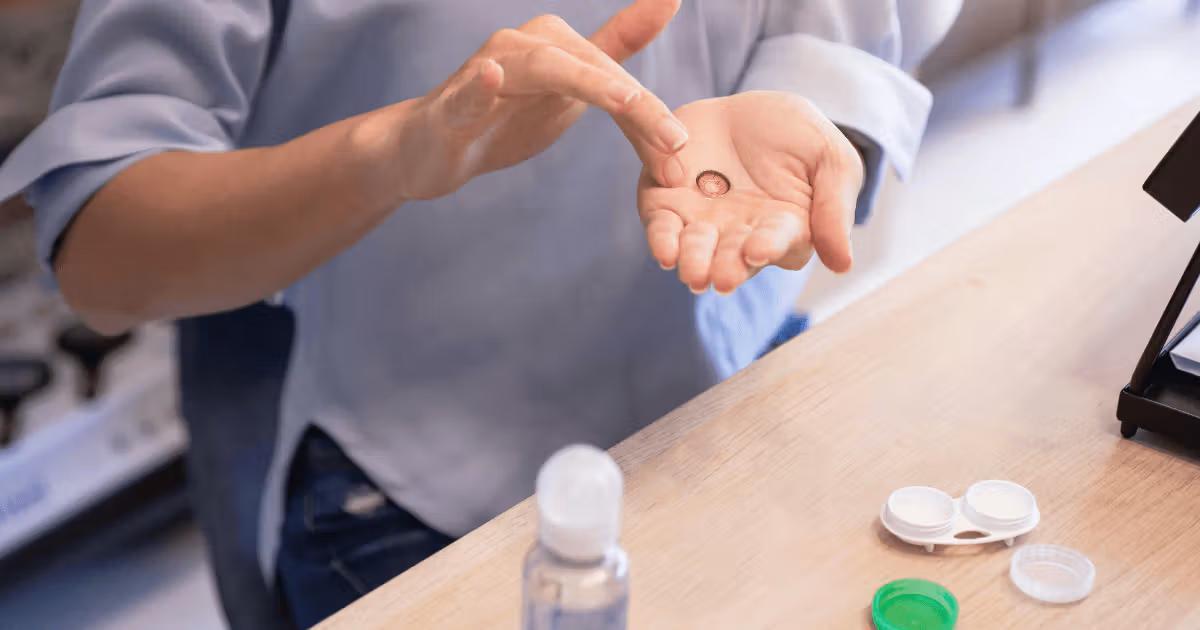
Compared with glasses, contact lenses can offer greater convenience for work, sports and everyday activities. However, wearing contact lenses also comes with the responsibility of caring properly for both your lenses and your eyes.
From cleaning and storage to everyday wearing habits, a few simple steps can help improve comfort and support good eye health. This guide covers practical contact lens care tips, common mistakes to avoid, and signs that may require professional attention, helping new contact lens wearers develop safer and healthier habits from the start.
Why proper contact lens wear and care matter
Contact lenses sit directly on the tear film and surface of the cornea. If lenses, hands or lens cases become contaminated, or lenses are worn longer than recommended, this may lead to dryness, irritation, redness and discomfort, and may increase the risk of corneal injury or eye infection.
Proper fitting is also important. A professional contact lens assessment can help determine whether the lens type, size and prescription are suitable for your eyes, while providing guidance on insertion, removal, cleaning and replacement schedules.
At the same time, when purchasing contact lenses, choose a reliable source and avoid unverified online sellers, as product quality, storage conditions and suitability may not be assured. To learn more about why contact lenses are considered medical devices and the potential risks of buying them from unknown sources.
Read our article《Did you know that contact lenses are medical devices?》→
How to clean reusable contact lenses properly
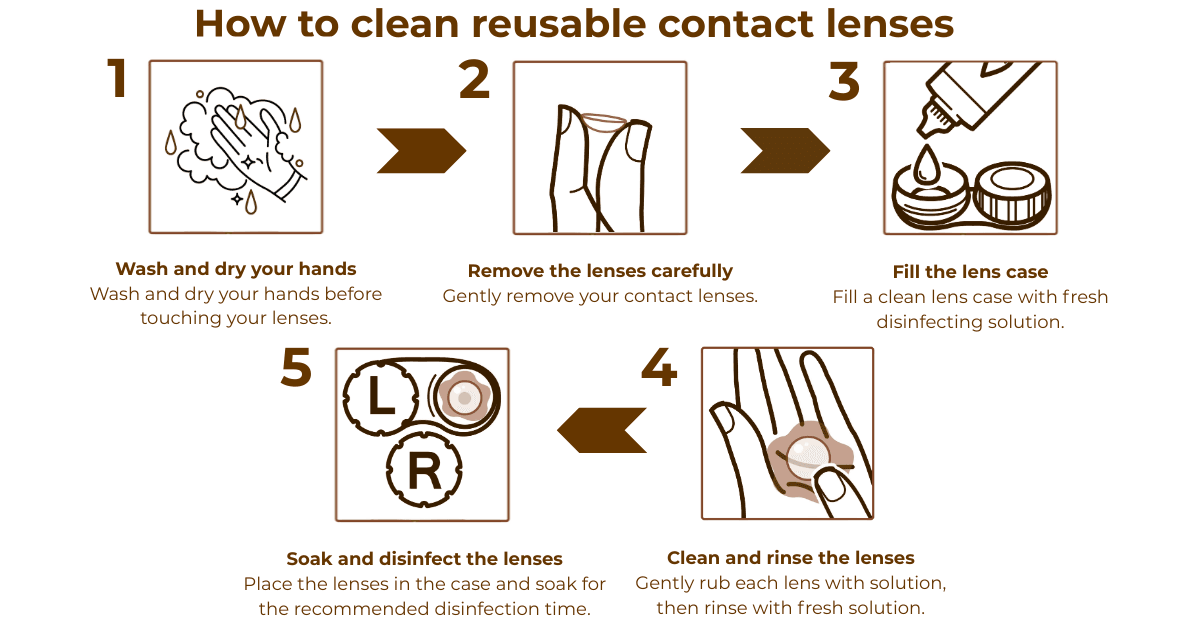
If you wear reusable contact lenses, they should be cleaned and stored properly each time they are removed. Always follow the instructions provided for your contact lens solution and the advice of your eye care professional.
You can follow these five basic steps as part of your daily lens care routine:
Your contact lens case needs care too
Many people carefully clean their contact lenses but forget about the lens case. A poorly cleaned contact lens case can also become a source of contamination. Follow these four simple steps for daily lens case hygiene:
- Empty: Throw away the old contact lens solution after each use. Never reuse old solution or top it up with fresh solution.
- Rinse: Rinse the case with fresh contact lens solution. Do not use tap water.
- Air-dry: Leave the case open and upside down on a clean tissue or towel and allow it to air-dry completely.
- Replace: Replace your contact lens case regularly, usually at least once every three months, or earlier if it becomes damaged or dirty.
Contact lens habits for safer everyday wear
Good contact lens habits can help reduce the risk of eye irritation and infection. Keep these simple practices in mind when wearing your lenses.
Frequently asked questions about contact lens care
Why do my eyes still feel dry or uncomfortable even with proper contact lens care?
- Even if you follow a proper contact lens cleaning and care routine, your eyes may still feel dry or uncomfortable. This can be caused by factors such as wearing lenses for too long, dry or dusty environments, wind, eye allergies, or sensitivity to certain lens materials or contact lens solutions.
- If you experience occasional mild dryness or discomfort, remove your contact lenses and give your eyes a break. It may also be helpful to review your wearing, cleaning and storage routine before using your lenses again.
- If the discomfort persists, worsens or keeps returning, stop wearing your contact lenses and seek professional eye care. Symptoms such as persistent redness, eye pain, light sensitivity or changes in vision should be assessed promptly by an eye care professional.
Why should I not use tap water to clean my contact lenses?
- When cleaning your contact lens case, always rinse it with fresh contact lens solution instead of tap water. Tap water, bottled water and other types of water should not be used to clean, rinse or store contact lenses.
- Water is not sterile and may contain bacteria or other germs that can get onto your contact lenses or lens case. Wearing contaminated lenses may increase the risk of eye irritation or infection.
- Always use a suitable contact lens solution and follow the instructions for cleaning, disinfecting and storing reusable contact lenses.
How do I know when to see an eye doctor for contact lens problems?
Contact lenses should only be worn for the recommended period for your lens type. Avoid wearing them longer than advised, and remove daily-wear contact lenses before sleeping. The suitable wearing time may vary depending on your lenses, eye health and individual tolerance.
Remove your contact lenses immediately and seek professional eye care if you experience:
- Eye pain or increasing discomfort
- Persistent or severe redness
- Sudden or noticeable blurred vision
- Sensitivity to light
- Unusual tearing or eye discharge
These symptoms may be signs of contact lens-related irritation, corneal injury or eye infection. Do not simply change your lenses or contact lens solution and continue wearing them. An eye care professional should assess the cause before you resume contact lens wear.
Everyday contact lens care tips
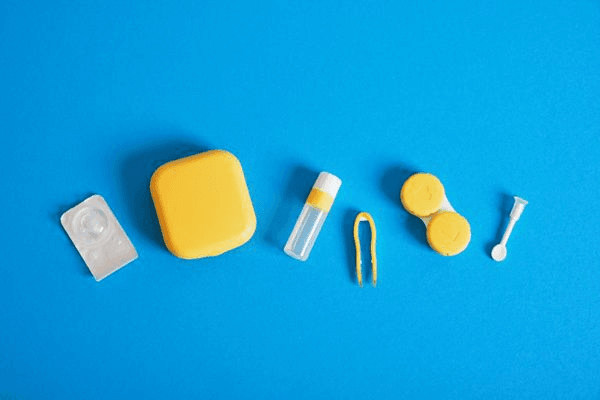
When wearing contact lenses, everyday activities such as applying makeup, using digital screens and travelling may affect your eye comfort and lens hygiene. Paying attention to a few simple habits can help make contact lens wear safer and more comfortable.
Contact lenses and makeup
- Put your contact lenses in before applying makeup.
- Remove them before removing eye makeup.
- Keep hairspray, cosmetics and other products away from your lenses where possible.
- If your eyes become red, swollen, painful or irritated, remove your contact lenses and seek professional eye care if the symptoms persist or worsen.
Using digital devices with contact lenses
Spending long periods looking at digital screens may reduce blinking and contribute to dry or tired eyes, especially when wearing contact lenses.
To reduce eye strain:
- Follow the 20-20-20 rule: every 20 minutes, look at something about 20 feet (6 metres) away for at least 20 seconds.
- Remember to blink regularly and avoid staring at the screen for long periods.
- Keep a comfortable viewing distance from your screen.
- Adjust your screen brightness and room lighting to avoid excessive glare or strong contrast.
Travelling with contact lenses
- When travelling, remember to bring spare contact lenses and backup glasses in case you need to remove or replace your lenses.
- Pack enough contact lens solution and a clean lens case, and keep essential lens-care items somewhere easy to access during your journey.
- Continue to follow your usual lens replacement schedule while travelling, and avoid sleeping, showering or swimming in contact lenses unless your eye care professional has specifically advised otherwise.
Good contact lens care goes beyond cleaning your lenses. If you are unsure about how to care for your contact lenses, or experience persistent redness, irritation, eye pain or changes in vision while wearing them, schedule a consultation with our eye doctor for further assessment and advice.