
What you need to know about Zika Virus and the Eye
Written by Eagle Eye Centre
Published on August 30, 2024

What is the Zika virus?
The Zika virus is a flavivirus transmitted by Aedes mosquitoes. It is related to the Dengue and West Nile virus. First identified in Uganda and French Polynesia, it has spread to Brazil, and been associated with an epidemic of foetal abnormalities especially microcephaly (abnormally small head-to-brain structure). It has now been identified in Singapore. The primary infection is usually mild, most commonly with fever, non-specific rash and joint pains. It may even be asymptomatic.

Eye problems in babies with Zika infection
When Zika infection occurs during the first or second trimester of pregnancy, eye problems may be seen together with fetal abnormalities. About one-third of babies with microcephaly were reported to have eye abnormalities, usually affecting both eyes.
The main findings included pigmentary retinal changes and defined areas of choroidal degeneration. Other reported findings included bleeding, optic nerve abnormalities, retinal blood vessel abnormalities, and changes in the central retina that may affect both central and peripheral vision. Iris defects and lens dislocation have also been described, although these have not been fully attributed to Zika virus.

Eye problems in adults with Zika infection
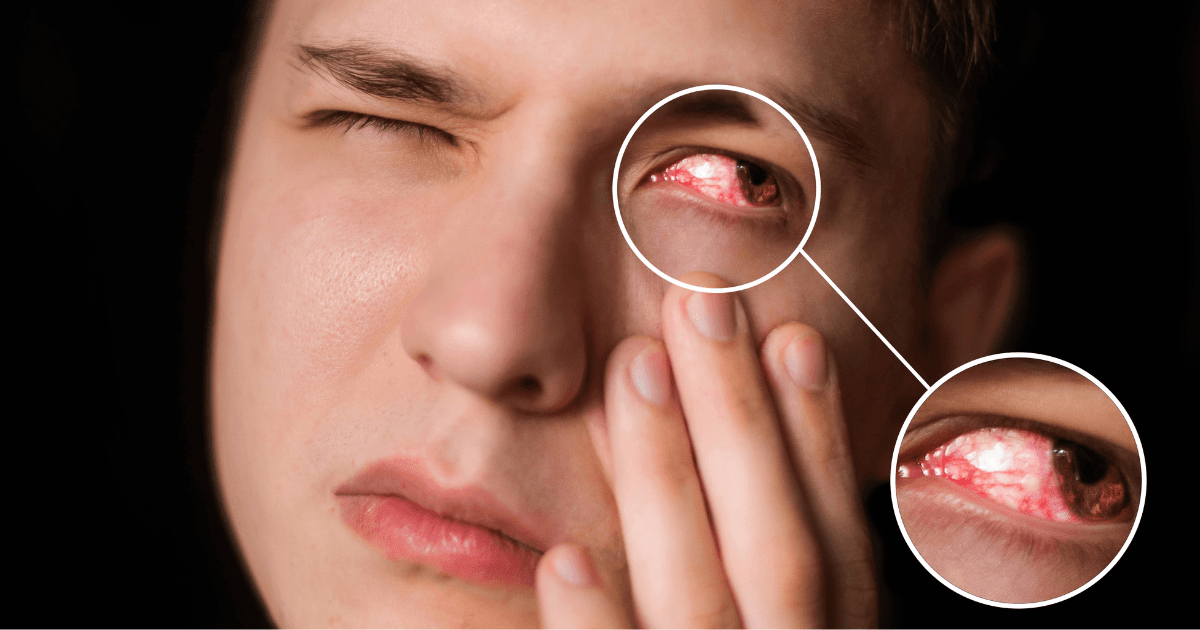
Zika virus may also affect adults. The most common eye finding is mild non-purulent conjunctivitis(red eye). In some cases, a more serious form of intraocular inflammation known as uveitis may occur and can present like a painful red eye.
If left untreated, uveitis may lead to complications such as cataract, high eye pressure, and in severe cases, retinal swelling and blindness.
When an eye examination may be needed
Babies with abnormal head structures such as microcephaly, where Zika virus may be a possible cause, should be referred for an eye examination. Adults with Zika infection and red eyes should also be referred if the redness does not improve or worsens after a few days.
Notes
Doctors should be aware that babies should be referred for eye examinations if they have abnormal head structures (microcephaly) that can be possibly attributed to the Zika virus. Likewise, adults with Zika virus infection and red eyes should be referred for an examination if the condition does not resolve or worsens after a few days.