
Age-Related Macular Degeneration
What is age-related macular degeneration?
Age-related macular degeneration (AMD) is a chronic eye disease that damages the macula, the part of the retina responsible for sharp central vision. While peripheral vision remains unaffected, AMD can gradually impair activities like reading, recognising faces and driving. It typically affects older adults and may progress slowly or quickly depending on the type.
Common symptoms
Early AMD may not cause symptoms. If you experience sudden pain or redness, this could suggest a different issue and should be urgently assessed. As the disease progresses, signs may include:
- Blurry or distorted central vision
- Difficulty recognising faces
- Trouble seeing in dim lighting
- Colours appearing faded
- Straight lines looking wavy
- Central blind spots
- Visual hallucinations in advanced stages
Types of macular degeneration
There are two primary forms of AMD. Dry AMD may progress to wet AMD over time. Early detection helps manage this transition effectively.

Dry AMD (Atrophic)
This more common form progresses slowly as deposits called drusen build up under the retina and the macula gradually thins.
Why macular degeneration occurs?
The exact cause remains unclear, but contributing factors include:
- Accumulation of drusen (protein and lipid deposits) beneath the retina
- Growth of abnormal blood vessels in wet AMD
- Age-related degeneration of retinal tissue
Other contributing mechanisms include oxidative stress, inflammation and poor blood supply to the macula.
Treatments

For Dry AMD
There is currently no cure, but progression can be slowed by:
- Nutritional supplements (AREDS formula)
- A healthy diet rich in leafy greens and omega-3
- Smoking cessation
- Low-vision aids to enhance remaining vision
- Rarely, implantable telescopic lenses may be considered
How macular degeneration is diagnosed
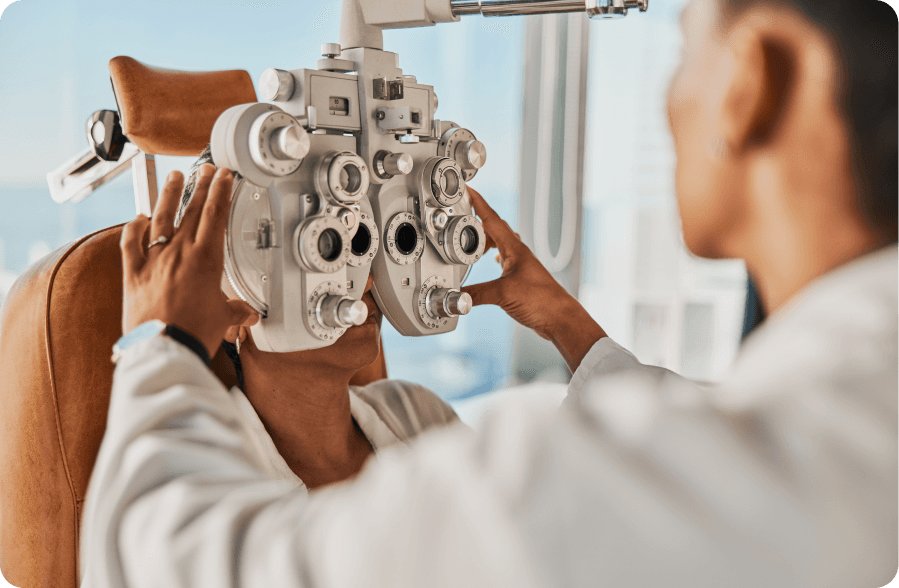
To detect AMD, our ophthalmologists may use the following:
- Visual acuity testing
- Amsler grid to check for central visual distortions
- Dilated eye exam to examine the macula directly
- Optical Coherence Tomography (OCT) for cross-sectional retinal imaging
- Fluorescein angiography to detect leaking vessels in wet AMD
Routine eye exams are key to early detection, even before symptoms appear.
Risk factors
Are aged over 50
Smoke or have a history of smoking
Have high blood pressure or heart disease
Have a family history of AMD
Are of Caucasian or Northern European ancestry
Eat a diet low in antioxidants and high in saturated fats
Have long-term sun exposure without UV protection
Risk factors
Our Specialists
Our team of board-certified ophthalmologists and licensed optometrists brings together decades of specialized training and experience. Each doctor has completed additional fellowship training in subspecialty areas, ensuring you receive the most advanced care available.



Frequently asked questions
Ask us anything about how we can help you understand eye care better!
WHAT YOU SEE MATTERS
Schedule your eye check-up
AMD is one of the leading causes of vision impairment among older adults in Singapore. The aging population, lifestyle factors and sun exposure contribute to increased prevalence.