
Understanding atropine eye drops for childhood myopia control
Written by Eagle Eye Centre
Published on August 7, 2026
Singapore has one of the highest rates of myopia in the world, making childhood myopia an important public health concern. In today’s digital environment, children often spend extended periods on schoolwork, reading and digital devices. Although screen use alone does not cause myopia, prolonged near work and limited time outdoors may be associated with its development and progression.
In Singapore, around 65% of children develop myopia by Primary six. Besides affecting learning and daily activities, higher levels of myopia are associated with a greater lifetime risk of potentially sight-threatening eye conditions.
If your child’s myopia continues to progress, atropine eye drops may be considered to help slow further myopia progression. This article explains how atropine works, how different concentrations compare, which side effects may occur and when atropine may be combined with Ortho-k.
Understanding myopia control in children
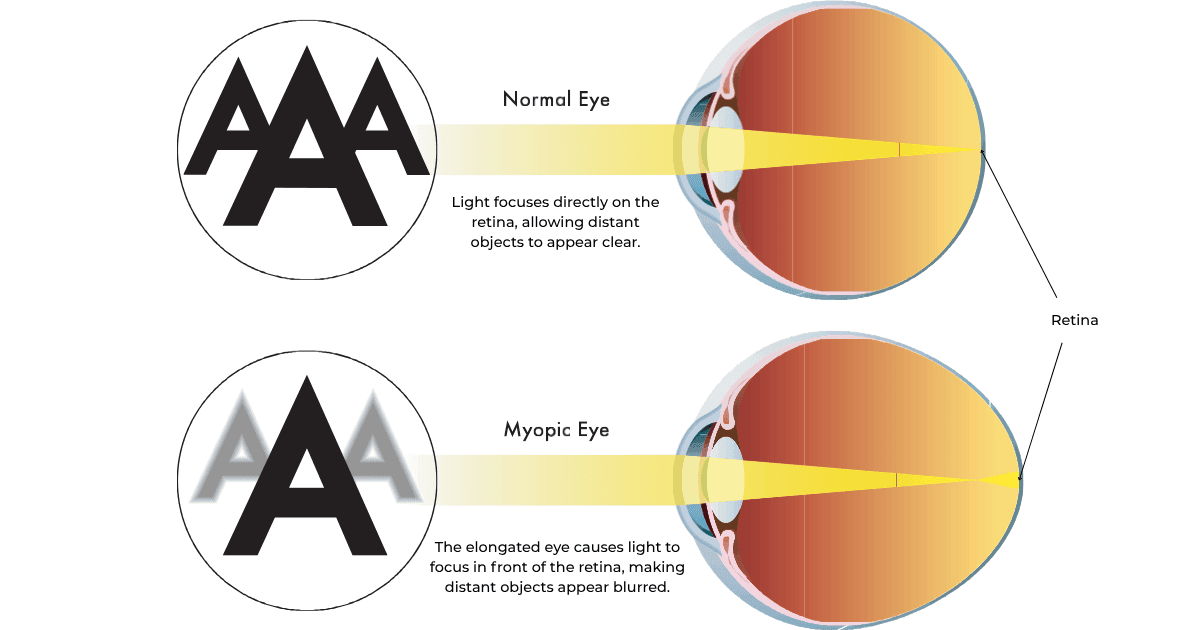
Myopia, also known as short-sightedness, is a common refractive error. It occurs when the eye grows too long from front to back, known as axial elongation, or when the eye’s optical system focuses incoming light too early. As a result, light focuses in front of the retina rather than directly on it, causing distant objects to appear blurred.
Children with myopia may have difficulty seeing the classroom board, recognising faces at a distance or reading faraway signs. Although glasses or contact lenses can correct blurred distance vision, they cannot reverse myopia that has already developed.
Both adults and children can develop myopia, but childhood myopia requires particular attention because a child’s eyes are still growing. As axial length continues to increase, myopia may progress, resulting in a stronger glasses prescription and more frequent changes to the child’s glasses.
Why is myopia control important during childhood?
Myopia often begins and progresses most rapidly during childhood, while the eyes are still developing. Children who develop myopia at a younger age may have more years of progression and a greater likelihood of developing high myopia later in life.
Starting appropriate treatment while childhood myopia is progressing rapidly may help limit the degree of myopia a child eventually develops and reduce related eye-health risks later in life. The goal of childhood myopia control is to slow changes in spectacle prescription and axial elongation, rather than reverse existing myopia. Regular monitoring of spectacle power and axial length can help identify rapid myopia progression and determine whether treatment should be started or adjusted.
What are atropine eye drops?
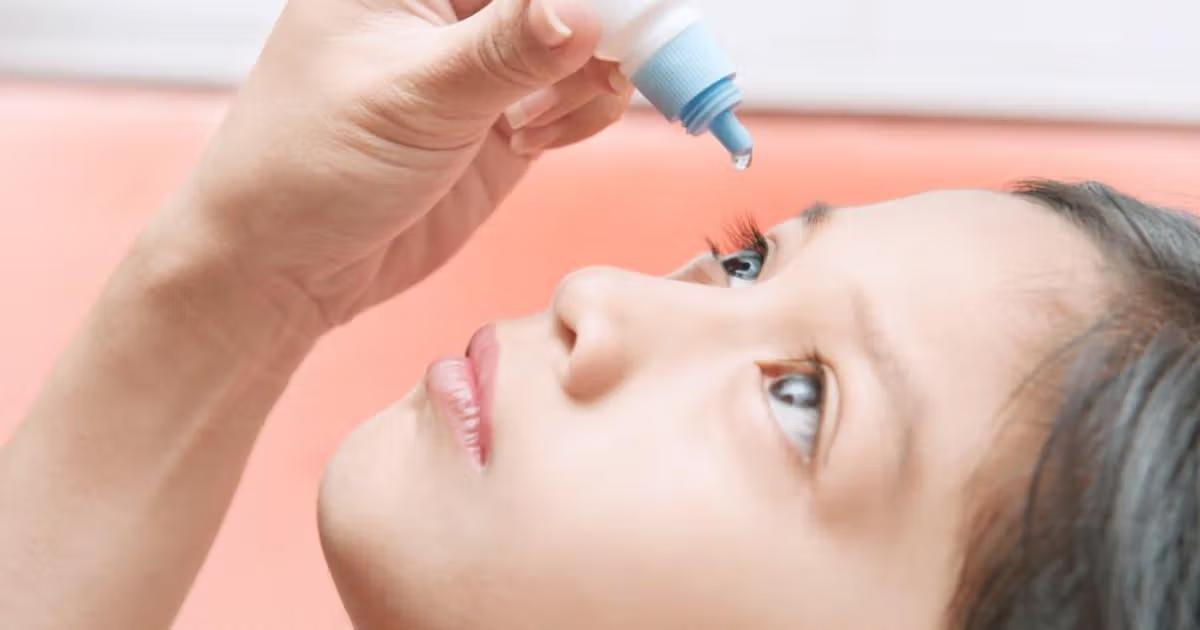
If your child’s myopia progression continues to increase, atropine eye drops may be considered to help slow further myopia progression. Atropine is a prescription medicine with several uses in eye care. At higher concentrations, it enlarges the pupils and temporarily reduces the eyes’ ability to focus on nearby objects. For childhood myopia control, atropine eye drops are often applied once nightly at the concentration prescribed by an eye doctor.
Although the exact way atropine slows myopia is not fully understood, studies show that it can help slow changes in refractive error and axial length, which is the length of the eye from front to back.
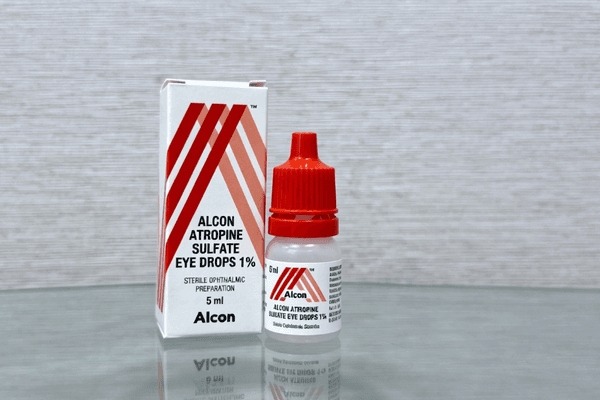
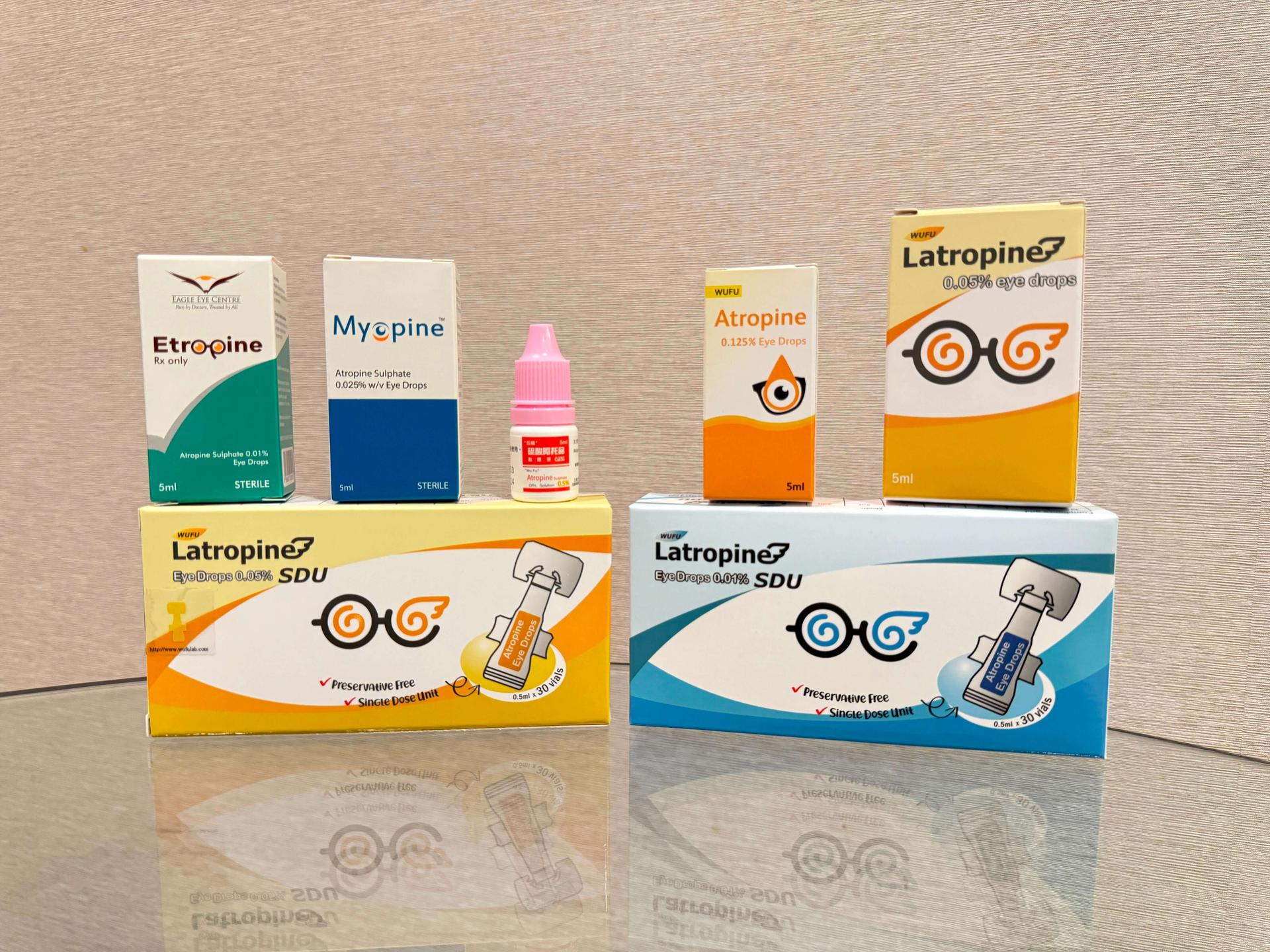
Atropine is available in different concentrations. The appropriate concentration depends on factors such as the child’s age, myopia progression, eye measurements, response to treatment and tolerance of side effects. The available atropine concentrations can be categorised as follows:
High-concentration atropine: 1%
Low-concentration atropine: 0.01%
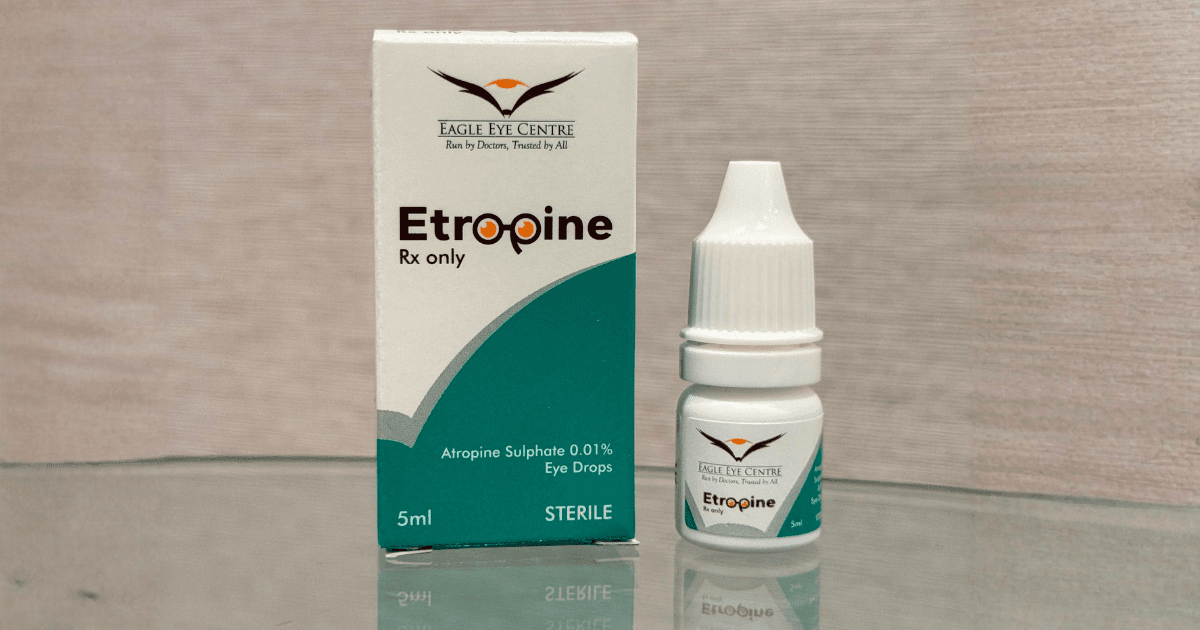
Other concentrations: 0.025%, 0.05%, 0.125% and 0.5%
How do different atropine concentrations compare for childhood myopia control?
Studies suggest a concentration-dependent response: higher atropine concentrations generally provide stronger myopia control but may also increase the risk of certain side effects. A higher concentration is therefore not necessarily suitable for every child.
- 1% atropine: An early two-year Singapore study involving children aged six to twelve found that 1% atropine slowed myopia progression. However, it was more likely to cause pupil dilation, light sensitivity, glare, reduced near-focusing ability and rare allergic reactions.
- 0.01% atropine: Usually well tolerated, with less effect on pupil size and near focusing. However, its myopia-control effect may be relatively limited in some children, particularly in slowing axial elongation.
- Other concentrations: 0.025%, 0.05%, 0.125% and 0.5% atropine: These concentrations may be prescribed according to the child’s age, myopia progression, eye measurements, treatment response and tolerance.
Higher concentrations may have a stronger treatment effect but are also more likely to cause pupil dilation, light sensitivity, glare or difficulty focusing on nearby objects. An eye doctor should select and adjust the concentration for each child.
Can atropine correct a child’s vision?
Atropine eye drops cannot reverse existing myopia or correct blurred distance vision. Instead, they are used to help slow further myopia progression. Their purpose is to manage myopia progression by slowing further changes in refractive error and eye growth. Children using atropine will therefore still need their prescribed glasses, contact lenses or another form of optical correction to see clearly. Their prescription may still change during treatment, as atropine cannot guarantee that progression will stop completely. The treatment is considered beneficial when myopia progresses more slowly than would otherwise be expected.
How can I tell whether atropine is slowing my child’s myopia?
Parents may not be able to tell whether atropine is slowing myopia by observing their child. Having few side effects means the drops are well tolerated, but regular eye checks are needed to determine whether myopia progression has slowed.
The effectiveness of atropine for childhood myopia control is assessed over a series of follow-up appointments. Current results are compared with the child’s baseline measurements and previous rate of progression.
An eye doctor will usually assess:
- Changes in refractive error: Eye examinations measure whether the child’s myopia progression is continuing to increase. Cycloplegic refraction may be used because it temporarily relaxes the eyes’ focusing system and can provide more accurate measurements in children.
- Changes in axial length: Axial length is the distance from the front to the back of the eye. Regular measurements can show whether eye growth has slowed compared with the child’s previous results or the expected rate for their age.
- Use of the eye drops and side effects: The doctor will check whether the drops are being used as directed and whether the child experiences light sensitivity, glare, blurred near vision or other side effects.
If your child’s myopia is still progressing quickly, the eye doctor will first review the test results and check whether the drops are being used as directed. The atropine concentration or treatment plan may then be adjusted if needed. Myopia progression and axial length are usually checked every six months, although an earlier review may be recommended after starting treatment or if side effects develop.
How long does my child need to use atropine eye drops?
There is no fixed treatment period. Many children use atropine for several years, often until myopia progression slows during their mid-to-late teenage years. As myopia may continue into early adulthood, regular eye checks and treatment response will help determine when treatment can be stopped.
Myopia may progress more quickly after atropine is stopped, especially in younger children or after treatment with higher concentrations. Parents should consult the eye doctor before stopping the drops. The doctor may gradually reduce the concentration or stop treatment with close monitoring.
Are atropine eye drops safe for children?
Generally, yes. Atropine eye drops are usually well tolerated by children when used as prescribed and monitored by an eye doctor. However, higher concentrations may cause increased light sensitivity, glare or difficulty focusing on nearby objects. Photochromic or progressive spectacles may help manage these effects. The concentration should be adjusted based on each child’s response and tolerance.
As a parent, you should:
- Follow the prescription and attend regular reviews.
- Consult the eye doctor before changing or stopping treatment.
- Seek immediate medical care if the eye drops are accidentally swallowed.
- Contact the clinic if persistent redness, discomfort or worsening light sensitivity occurs.
Combination treatment: atropine and Ortho-K
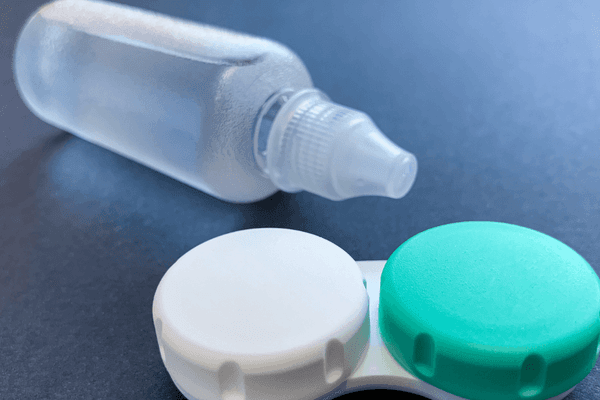
Atropine eye drops may be used on their own to help slow childhood myopia progression. If myopia continues to progress rapidly despite treatment, an eye doctor may consider adding orthokeratology, commonly known as Ortho-K, after a detailed eye assessment.
Ortho-K uses specially fitted rigid gas-permeable contact lenses worn overnight to temporarily reshape the cornea. After the lenses are removed in the morning, this temporary reshaping may provide clear daytime vision and may also help slow axial elongation. As atropine and Ortho-K are thought to influence myopia progression in different ways, combination treatment may provide additional control for selected children. However, it is not necessary or suitable for every child.
Clinical research, including a recent two-year study involving children aged six to eleven, suggests that combining 0.01% atropine with Ortho-K may slow axial elongation more effectively than Ortho-K alone.
Combination treatment usually includes:
- Prescribed atropine eye drops used at night
- Ortho-K lenses worn during sleep
- Regular monitoring of vision, axial length and corneal health
However, this does not mean combination treatment is necessary or suitable for every child.
Combination treatment may be considered when:
- Myopia is progressing rapidly.
- Progression continues despite a single treatment.
- Eye measurements indicate a higher risk of progression.
- The child can safely manage overnight lens wear and care.
Because Ortho-K is a contact lens treatment, proper fitting, daily cleaning and regular follow-up are essential. Poor lens hygiene may increase the risk of corneal irritation or infection. Suitability should be determined through an individual eye assessment rather than family history or myopia progression alone.
Not sure whether your child has myopia?
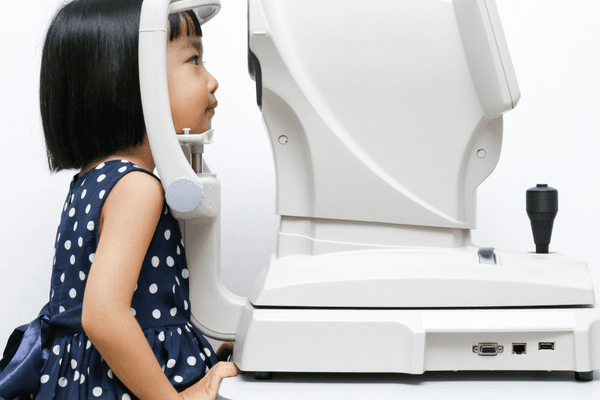
Children may not always realise or explain that their distance vision is blurred. Parents may instead notice signs of childhood myopia, such as squinting, difficulty seeing the classroom board or needing increasingly stronger glasses.
A Myopia Control Suitability Screening can assess your child’s current vision and identify factors associated with myopia progression. At Eagle Eye Centre, the screening includes:
- Auto-refraction or eye power estimation
- Visual acuity and refraction assessment
- Eye pressure measurement
- Colour vision testing
- Assessment by a senior optometrist
- Screening report and discussion of the findings
Based on the findings, the optometrist may recommend further assessment by an eye doctor to determine whether atropine or combination treatment may be appropriate. Attending the screening does not automatically mean that treatment will be prescribed.
If you notice changes in your child’s distance vision or glasses prescription, a Myopia Control Suitability Screening can help clarify their current vision and whether further childhood myopia control evaluation may be appropriate.